The Grotesque: Embodying Distortion and Meaning in Art and Culture
Few aesthetic concepts carry as much weight and ambiguity as the Grotesque. It is a mode that thrives on discomfort, blending the familiar with the monstrous, the comic with the terrifying. For professionals in design, educators in the humanities, researchers in psychology, and creators across media, understanding the Grotesque is not merely an academic exercise—it is a practical tool for engaging audiences, provoking thought, and communicating complex emotions. This article explores the multifaceted nature of the Grotesque, its historical evolution, its defining characteristics, and its meaningful applications in the modern world.
Historical Roots and the Evolution of the Grotesque
The term Grotesque originates from the Italian grottesco, derived from grotta (cave). It first described the ornamental wall paintings discovered in the buried ruins of Nero's Domus Aurea in 15th-century Rome. These frescos featured hybrid creatures—half-human, half-plant, part-animal—cavorting in fantastical, impossible architectures. The rediscovery of these “cave” paintings sparked a revolution in Renaissance art, with artists like Raphael incorporating Grotesque motifs into the Vatican Loggia. What began as a specific decorative style quickly broadened into a mode of expression that challenged classical ideals of harmony and proportion.
Over centuries, the Grotesque evolved beyond ornamentation. In the 18th and 19th centuries, it became a literary and visual tool for satire and social critique. Artists like Francisco Goya used the Grotesque to expose the horrors of war and the absurdity of human folly. Writers like Edgar Allan Poe and Nikolai Gogol employed it to explore the uncanny and the psychologically disturbed. Today, the Grotesque permeates everything from horror films and video game design to fashion runways and digital art, proving its enduring power to unsettle and fascinate.
Defining Characteristics of the Grotesque
To work with the Grotesque effectively, one must understand its core attributes. It is not synonymous with mere ugliness or horror. Instead, it operates at a threshold where multiple realms collide.
- Hybridity and Metamorphosis: The Grotesque combines incompatible elements. A human body with animal parts, a face that morphs into a landscape, or a machine that bleeds. This transformation challenges categorical boundaries and invites viewers to question what is natural.
- The Comic and the Terrifying: Perhaps the most distinctive trait of the Grotesque is its ability to evoke simultaneous laughter and dread. The court jester’s grimace, the clown’s exaggerated smile, or the cartoonishly deformed villain—all play on this duality, creating emotional dissonance.
- Exaggeration and Distortion: Proportions are warped. Features are enlarged, shrunk, or relocated. This is not random chaos but purposeful exaggeration that amplifies a specific emotional or conceptual message.
- The Body and Its Limits: The Grotesque is profoundly physical. It focuses on the body’s openings, protrusions, decay, and processes—eating, excreting, birthing, dying. It reminds us of our materiality and mortality.
- The Uncanny and the Familiar: The Grotesque disturbs by rendering the familiar strange. A doll that moves on its own, a house that breathes, a smile that holds menace. This proximity to normality makes it more unsettling than outright fantasy.
Applications in Visual Design and Typography
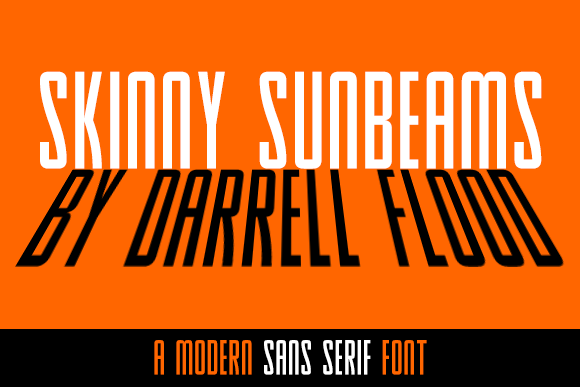
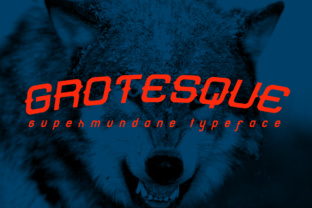
For creators and business owners, the Grotesque offers a distinctive visual language. In typography, the term Grotesque refers to a style of sans-serif typeface developed in the 19th century—characters like Akzidenz-Grotesk or Franklin Gothic. These fonts are characterized by their straightforward, unadorned forms, often with a slight awkwardness or irregularity that sets them apart from later geometric sans-serifs. Using a Grotesque typeface can convey a sense of raw honesty, industrial strength, or even a subtle, emotional edge.
In graphic design and branding, integrating Grotesque imagery—distorted figures, surreal hybrids, or jarring color combinations—can break through visual clutter. A poster for a music festival might feature a collage of grotesque faces to evoke energy and transgression. A fashion brand might use grotesque silhouettes to challenge conventional beauty standards. The key is intentionality: the Grotesque should serve the narrative, not merely shock for shock’s sake.
Case Study: Grotesque in Digital Art and UX
User experience (UX) researchers have begun examining how Grotesque elements affect user engagement. Experiments with slightly distorted interfaces—off-kilter grids, asymmetrical alignment, or unsettling micro-interactions—reveal that such designs increase attention and emotional recall, but also risk alienating users if overused. The lesson for professionals is to employ the Grotesque sparingly and with clear purpose, such as in error messages, transitional animations, or interactive storytelling where unease is part of the experience.
The Grotesque in Literature and Storytelling
For educators and researchers, literary Grotesque provides a rich field of analysis. Unlike horror, which aims to frighten, the Grotesque aims to disturb through ambiguity. The protagonist of Franz Kafka’s “The Metamorphosis” turning into an insect is a quintessential example: it is absurd, pitiful, and horrifying all at once. The grotesque invites readers to sit with discomfort rather than resolve it.
Contemporary authors like China Miéville and Helen Oyeyemi weave the Grotesque into speculative fiction to explore identity, colonialism, and the body politic. In writing, grotesque characters serve as mirrors for societal anxieties. They are not simply villains; they are complex figures that embody contradictions. For storytellers, deploying the Grotesque means allowing characters to exist in a state of unresolved deformity—physical, moral, or social—and using that state to illuminate truths that polished, harmonious forms cannot reach.
Practical Considerations for Creators and Hobbyists
Whether you are a designer, writer, painter, or game developer, working with the Grotesque requires careful calibration. Here are actionable considerations drawn from practice:
- Start with Meaning: A grotesque image without context risks being dismissed as mere shock value. Anchor the distortion to a theme—mortality, social hypocrisy, identity fragmentation—so the audience has a foothold for interpretation.
- Balance with the Familiar: The Grotesque works best when juxtaposed with the recognizable. A human hand with one extra finger is more unsettling than a completely alien appendage. Embed the strange within a believable world.
- Consider Your Medium: The Grotesque translates differently across media. In sculpture, texture and scale matter. In animation, timing and fluidity of distortion affect the viewer’s emotional response. In static images, composition and contrast carry the burden.
- Know Your Audience: What is grotesque to one culture may be ordinary or sacred to another. Research cultural contexts to avoid unintended offense. The Grotesque should challenge, not harm.
- Iterate and Test: Show your work to a small group before public release. Gauge whether the grotesque elements evoke the intended mixture of fascination and discomfort, or whether they simply repel.
The Grotesque in Contemporary Culture: Trends and Implications
From a broader cultural perspective, the Grotesque has experienced a resurgence in mainstream media. Television series like “The Boys” use grotesque superhero bodies to critique corporate power and celebrity culture. Video games such as “Bloodborne” and “Scorn” build entire worlds from grotesque architecture and creatures, inviting players to explore themes of decay and transformation. In fashion, designers like Rei Kawakubo of Comme des Garçons deconstruct the human silhouette with grotesque bumps and asymmetrical padding, challenging norms of wearability and beauty.
For business owners, this trend signals a market appetite for authentic, non-polished experiences. Consumers, especially younger demographics, are drawn to brands that embrace imperfection, weirdness, and even ugliness—what some call the “anti-aesthetic.” A brand identity that incorporates Grotesque elements can signal fearlessness, creativity, and a willingness to question the status quo. However, it must align with the brand’s core values. A financial institution adopting grotesque imagery would likely erode trust; a streetwear label or art gallery could use it to build a cult following.
Psychological and Cognitive Dimensions
Researchers in cognitive psychology and neuroscience have studied the Grotesque to understand how the brain processes conflicting stimuli. When presented with a grotesque image—a beautiful face with a distorted eye, for example—the brain struggles to categorize it, leading to prolonged gaze and heightened emotional arousal. This “cognitive dissonance” can enhance memory retention, which is why grotesque imagery is often used in advertising for products that aim to be unforgettable. For educators, integrating grotesque examples in lessons can make abstract concepts (like cognitive biases or historical trauma) more visceral and memorable.
Ethical considerations arise here. Using the Grotesque to manipulate emotions requires responsibility. The goal should be to enlighten, not traumatize. In research and education, clear debriefing and consent are essential when exposing subjects to grotesque material.
Comparing the Grotesque with Related Aesthetic Modes
To use the term Grotesque with precision, it helps to distinguish it from neighboring concepts. It is not the same as the uncanny, though they overlap. The uncanny is a feeling of wrongness within the familiar; the Grotesque is a visible, often exaggerated form of that wrongness. The sublime inspires awe and terror through vastness, while the Grotesque inspires disgust and fascination through distortion and decay. Camp exaggerates for theatricality and humor, but lacks the horrifying edge that defines the Grotesque. Understanding these distinctions allows creators to choose the right mode for their intentions.
Final Observations on Mastering the Grotesque
The Grotesque is not an easy tool to wield. It demands confidence to embrace ugliness and ambiguity. But for those who invest in understanding its mechanics—its hybridity, its emotional duality, its bodily focus—it offers an unparalleled capacity for expression. Whether you are a researcher analyzing its cognitive effects, a educator using it to provoke discussion, a designer seeking to break free from sterile minimalism, or a hobbyist exploring its boundaries, the Grotesque rewards patience and intention. Let it disturb you. Let it teach you. And then let it emerge in your work as a voice that refuses to be smooth, predictable, or polite.